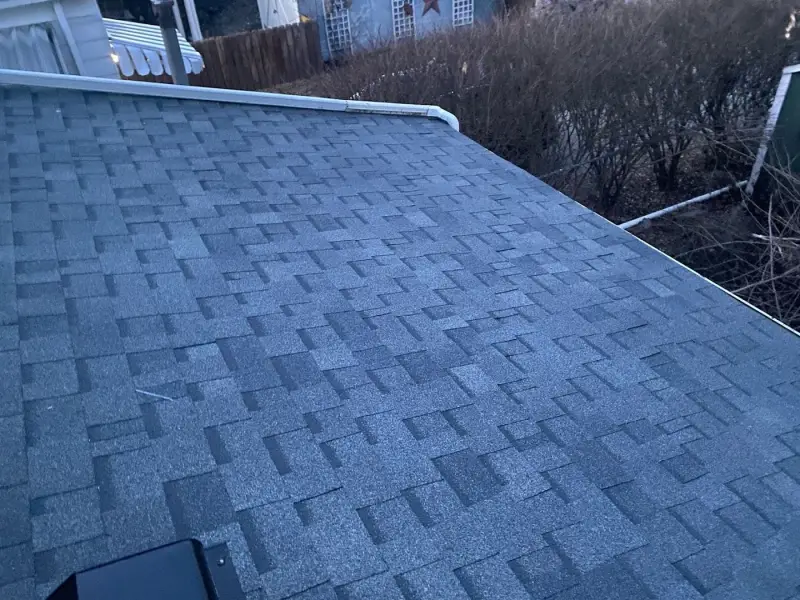
A few lifted shingles can often be repaired. Widespread wear usually means a new roof is the better value. How to weigh age, damage, cost and your plans for the house.
Excellence You Can TrustNow Serving PittsburghFree EstimatesInsurance Claim HelpLifetime Product Warranty24/7 Emergency RoofingRoofs, Siding, Gutters, Windows
Excellence You Can TrustNow Serving PittsburghFree EstimatesInsurance Claim HelpLifetime Product Warranty24/7 Emergency RoofingRoofs, Siding, Gutters, Windows
Excellence You Can TrustNow Serving PittsburghFree EstimatesInsurance Claim HelpLifetime Product Warranty24/7 Emergency RoofingRoofs, Siding, Gutters, Windows
Excellence You Can TrustNow Serving PittsburghFree EstimatesInsurance Claim HelpLifetime Product Warranty24/7 Emergency RoofingRoofs, Siding, Gutters, Windows
Roof RepairPublished 4 min read
Once you know your roof has a problem, the next question is what to do about it. Some roofs need a targeted repair and nothing more. Others are past the point where repairs make sense. This guide covers the questions that usually decide it for Pittsburgh homeowners, and the honest trade-offs on each side.
Repair and replacement solve different problems
A repair fixes a specific failure: a few shingles lost in a windstorm, a cracked boot around a vent pipe, worn flashing at a chimney, a small area of damaged decking. The rest of the roof stays as it is.
A replacement deals with the roof as a whole. The old materials come off, the decking is checked and fixed where needed, and new underlayment, flashing, shingles and ventilation details go on together.
So the real question is not which option is better. It is whether your problem is local or whether the whole roof is wearing out. If you are still working out what you are looking at, start with our guide to the signs your roof needs replacement.
Questions that usually point to a repair
Is the damage limited to one area? A single leak at a chimney or a few missing shingles on an otherwise healthy roof is a classic repair.
Is the rest of the roof in good shape? Shingles that still lie flat, hold their granules and show no widespread cracking can often keep going for a good while.
Was there a clear cause? Wind, a fallen limb or a failed piece of flashing are specific events with specific fixes.
Is the roof relatively young? Newer roofs usually have plenty of life left once the damaged area is fixed.
In these cases a well-done repair is usually the sensible, lower-cost choice. A contractor who pushes a full replacement for a small, isolated problem is not doing you any favors.
Questions that usually point to a replacement
Are the signs of wear spread across the roof, such as curling, cracking and bald spots on most slopes?
Do leaks keep showing up in new places after each repair?
Is the decking soft or sagging in more than one area?
Are there already two or more layers of shingles, which limits what can be added on top?
Has the roof been patched so many times that new repairs no longer blend in or seal well?
Are you planning other work, like new siding or gutters, where it makes sense to coordinate the roof at the same time?
When several of these are true, money spent on repairs often goes into a roof that will need to be replaced soon anyway.
The trade-offs, laid out plainly
Repair
Lower upfront cost and usually quicker to schedule.
Keeps a roof in service that still has useful life.
Matching older shingles can be difficult, so repairs may be visible.
Does not address wear elsewhere on the roof, so more repairs may follow.
Replacement
A larger investment up front.
Gives you a chance to fix hidden problems, like damaged decking or poor ventilation, while the roof is open.
New materials can come with a manufacturer's product warranty, plus whatever workmanship guarantee your contractor offers.
Lets you choose a new material or color, and can be a selling point if you plan to move.
It also helps to think about cost over time rather than only the next bill. A repair that buys several good years on a sound roof is money well spent. A string of repairs on a roof that is failing everywhere can add up, and each one only holds back water in one spot while the rest of the roof keeps aging.
There is no universal answer. A roof with one bad spot and plenty of life left should be repaired. A roof that is tired everywhere is usually better replaced before water reaches the interior.
How older Pittsburgh homes change the math
Many Pittsburgh houses were built before 1940, and their roofs reflect it. You may have board decking, a mix of steep main slopes and a low-slope rear roof on a rowhouse, small porch roofs and dormers, or chimneys that have been rebuilt more than once. Each of these adds places where water can get in, and each one makes a careful diagnosis more important.
A low-slope rear section, for example, may be failing while the steep front shingles are fine. In that case, replacing only the flat section with a rubber roof can be a reasonable middle path. On the other hand, complex rooflines with many valleys can make repeated spot repairs less effective, because the problem is often in how the pieces tie together.
Insurance can also play a role. If the damage came from a storm, part or all of the work may be covered under your policy, which can shift the decision. Our article on what to do after storm damage explains that process.
Getting an honest answer
The most useful thing you can get before deciding is a clear, photographed explanation of what is wrong and why. Ask any contractor to show you the damage, tell you whether they would repair or replace, and explain the reasoning.
A few questions worth asking before you decide:
What exactly is causing the problem, and can you show me photos of it?
If I repair now, what else on the roof should I keep an eye on?
If you recommend replacement, what did you see that rules out a repair?
Will the decking be checked, and how would any damaged boards be handled and priced?
Is any of this likely to be storm damage that my insurance should look at?
A contractor who answers these clearly, without rushing you, is giving you what you need to make the call yourself.
That is how we approach it at Straight A. Our inspections are free and there is no pressure. If a roof repair will do the job, we will say so. If roof replacement makes more sense, you will get a detailed, line-by-line written quote, and nothing starts until you approve it. Contact us to schedule an inspection.
Freeze-thaw cycles, ice dams, wet snow and a yard full of leaves all test a roof between November and March. Here is what to check this fall, and what to leave to a roofer.
Stay safe, stop the water, document everything and get the roof inspected before you accept a quick patch. A step-by-step guide for the hours and days after a storm.
Granule loss, curling shingles, repeat leaks and a soft deck are the signs that matter. What to look for from the ground and the attic, and what each one tells you.